3 Aug 2026
Tracking Player Habit Shifts Through Directory Search Filters and Their Impact on Bonus Rollover Adjustments in Expanding Markets

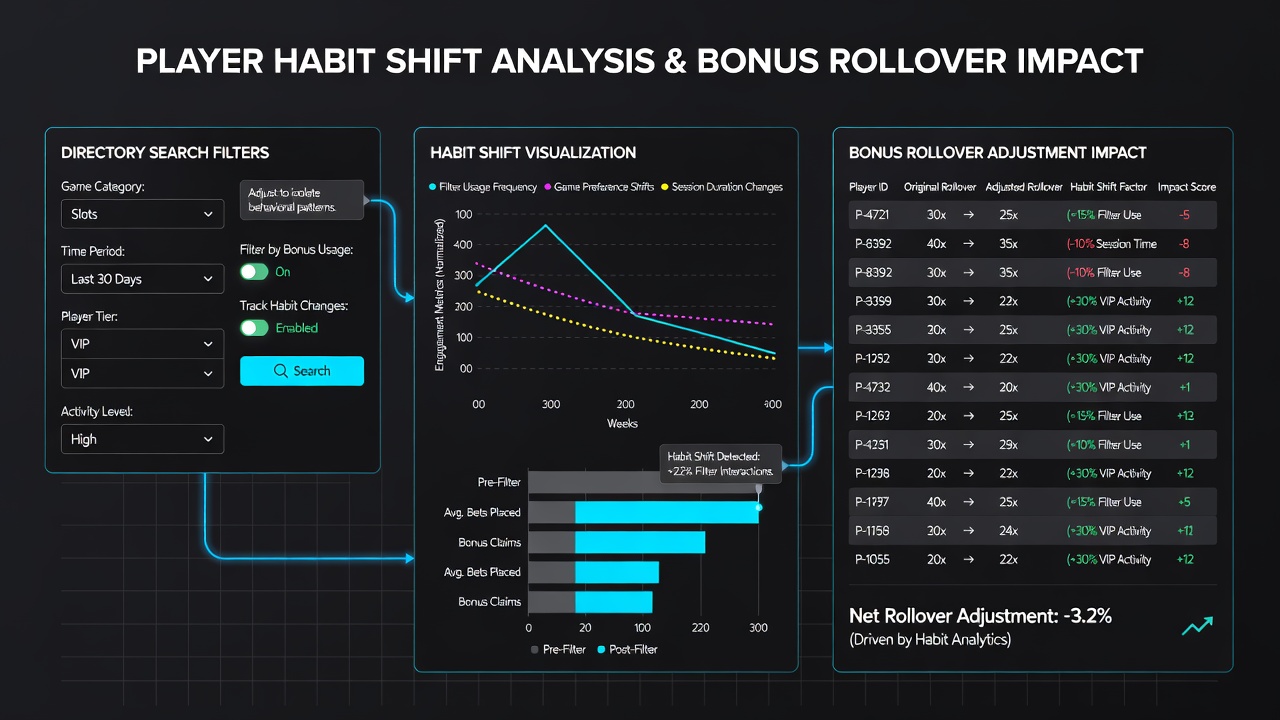
Directory search filters have become central to how operators monitor player preferences across growing gaming jurisdictions, and these tools capture shifts in what users seek when they query bonus terms and conditions. Data collected through these filters reveals patterns in rollover tolerance that then feed directly into adjustments made by platforms entering new markets, where competition for player attention often hinges on structured promotions. Observers note that filters allowing users to sort by maximum rollover multipliers, minimum deposit thresholds, and game contribution rates generate logs that operators review when calibrating offers for regions with recent regulatory changes.
How Search Filters Capture Habit Data
Filters in major casino listing platforms record every combination of parameters applied during a search session, and this creates datasets that highlight whether players prioritize lower rollover multipliers or accept higher ones in exchange for larger bonus amounts. When users repeatedly select options that cap rollovers at 20x or below, the resulting aggregates show clear directional movement toward more lenient terms, while spikes in searches for high-contribution slots indicate willingness to meet steeper playthrough demands. These logs update in near real time, giving operators visibility into preference changes that coincide with market expansions in states such as those adding online offerings during 2026.
Adjustments in Expanding Markets
Operators entering new jurisdictions review aggregated filter data to decide rollover structures before launch, and this practice has led to measurable differences in promotion design across borders. In markets where directory queries show heavy filtering for cashback-style refunds with low or no rollover, platforms have introduced hybrid offers that blend deposit matches with reduced playthrough on select titles. Data from August 2026 indicates that several sites adjusted rollover requirements downward after filter logs revealed a 34 percent increase in searches specifying multipliers under 25x compared with the prior quarter. Such shifts occur because the information arrives before full player bases form, allowing preemptive tuning rather than post-launch corrections.
Role of Aggregated Comparison Tools
Comparison platforms that pull live data from multiple directories supply operators with cross-referenced habit signals, and these tools highlight when search behavior diverges between established and emerging regions. One documented case involved a multi-state operator that lowered average rollover from 35x to 28x on new customer bonuses after comparison logs showed consistent filtering for lower thresholds in recently legalized areas. The adjustment aligned with broader industry figures released by the American Gaming Association that tracked promotional activity through mid-2026. Another instance saw platforms in a Canadian province raise contribution percentages on table games after filter data indicated players were narrowing searches to bonuses where slots alone met full requirements.
Regional Variations and Timing
Timing plays a notable part because filter data from the first weeks after a market opens often differs from later stabilized patterns, and operators who monitor these early signals can refine rollover terms before fixed promotional calendars lock in. In one expanding European jurisdiction, directory logs from August 2026 showed a surge in queries for bonuses with 15x or lower rollovers tied to live dealer titles, prompting two major entrants to restructure their welcome packages accordingly. The European Gaming and Betting Association has documented similar data flows in its periodic market reports, confirming that filter-derived insights influence terms across multiple regulatory environments without requiring direct player surveys.
Conclusion
Directory search filters continue supplying operators with granular habit information that shapes bonus rollover decisions in markets still building regulatory frameworks and player bases. The connection between logged queries and subsequent adjustments demonstrates how aggregated search behavior translates into concrete promotional changes across expanding regions. As more jurisdictions authorize online gaming, the same filter mechanisms are expected to supply increasingly detailed signals that operators will use to calibrate rollover structures before and during market entry.