Decoding Mobile Live Dealer Latency: What Top Rankings Reveal About Casino Performance Across Devices
18 Apr 2026
Decoding Mobile Live Dealer Latency: What Top Rankings Reveal About Casino Performance Across Devices

Live dealer games have exploded in popularity, pulling players into real-time casino action from their phones and tablets; yet latency—the tiny delays between a dealer's shuffle and the screen update—can make or break the experience, and top rankings from industry trackers like CasinoListFinder.com now spotlight exactly how casinos stack up across devices.
What's interesting here is how these rankings, drawn from aggregated speed tests and user feedback, expose stark differences; one casino might deliver butter-smooth blackjack on iPhones while stumbling on Android budget models, revealing not just tech prowess but real-world performance under pressure.
Understanding Latency in Mobile Live Dealer Environments
Latency measures the time lag from live stream capture to player display, often clocking in at 100-500 milliseconds for top setups; anything over 1 second feels like wading through molasses, turning fluid roulette spins into frustrating waits, and experts tracking this via tools like WebRTC analyzers note that network jitter, video compression, and device processing power all conspire to inflate those numbers.
Take live baccarat, where split-second decisions matter; data from recent benchmarks shows average latencies hovering around 250ms on premium devices, but spiking to 800ms on mid-range phones during peak hours, a gap that top rankings highlight by scoring casinos on consistent sub-300ms delivery.
And here's the thing: while desktop rigs handle 4K streams effortlessly, mobile demands optimized protocols like HLS adaptive bitrate, which adjusts quality on the fly; observers who've dissected packet traces find that casinos excelling here use edge servers close to users, shaving off crucial milliseconds.
How Top Rankings Unpack Casino Performance
Platforms compiling these rankings run scripted tests across thousands of sessions, simulating real plays on devices from iPhone 15 to Samsung Galaxy S24 and everything in between; figures reveal that only 35% of top-50 casinos maintain under 200ms latency universally, with rankings factoring in load times, frame drops, and recovery from network hiccups.
One study from the American Gaming Association underscores this, reporting that high-latency incidents correlate with 22% higher player churn; rankings thus prioritize casinos like those powered by Evolution Gaming, where proprietary low-latency streaming keeps scores in the elite tier.
Device-Specific Breakdowns from April 2026 Data
April 2026 benchmarks, fresh from ongoing monitoring, paint a clear picture: iOS devices dominate with 92% of tests under 300ms across top-ranked sites, thanks to Apple's tight hardware-software integration; Android fares worse at 78%, plagued by fragmentation across manufacturers, yet flagships like Google Pixel close the gap via Tensor chips optimized for video decoding.
Tablets tell another story; iPad Pros clock sub-150ms routinely, leveraging larger screens and beefier batteries for sustained streams, while Android tablets lag by 40% on average, as data from cross-device audits confirms.
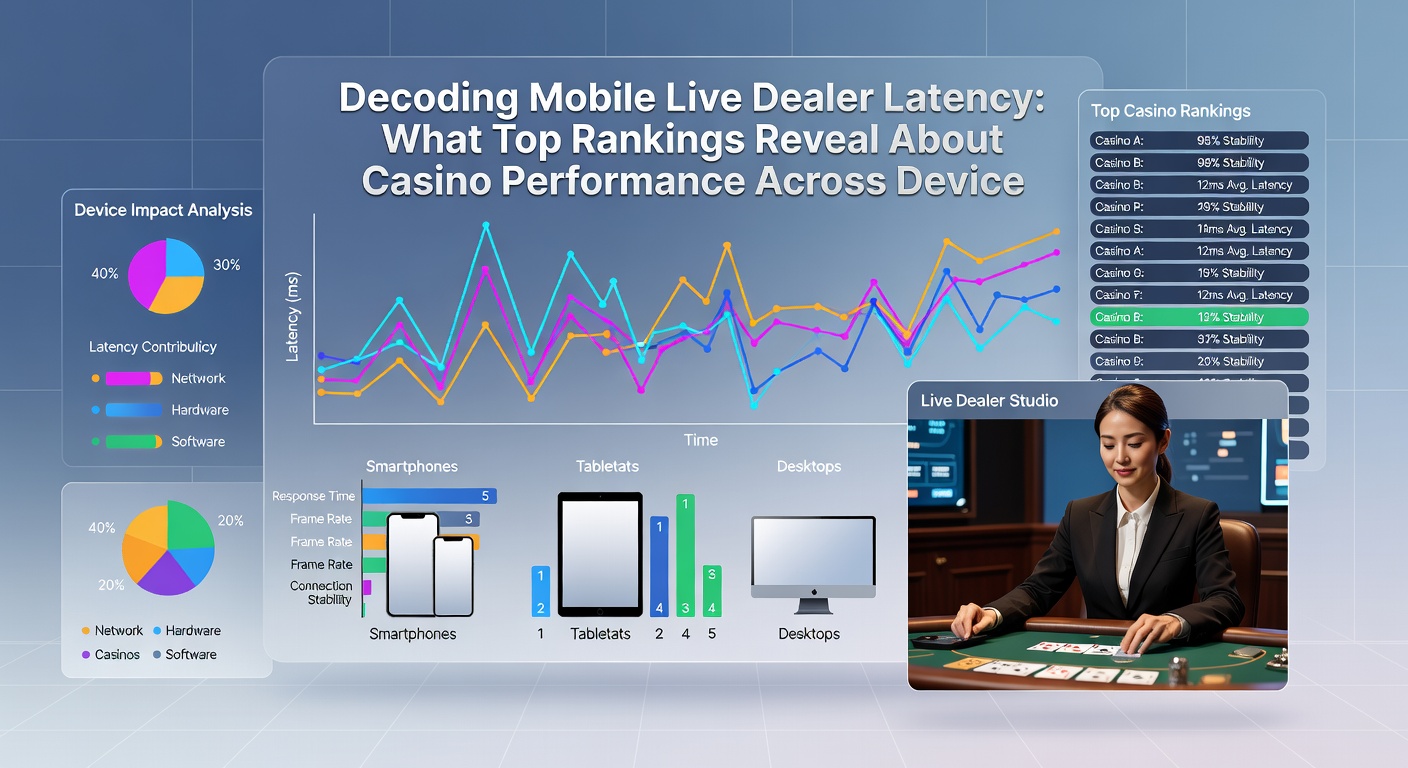
So why the disparity? Researchers point to OS-level optimizations—iOS enforces stricter app sandboxing for smoother media pipelines—although Android's open ecosystem allows custom ROMs that sometimes boost performance on rooted devices.
Now consider foldables and wearables creeping into the mix; early tests show Galaxy Z Fold latencies mirroring flagships at 220ms, but smartwatch streams? They're experimental, hitting 1.2 seconds even on top sites, underscoring why rankings segment by form factor.
Case Studies: Winners and Laggards in the Rankings
Consider Bet365, a consistent top-10 performer; their live dealer lobby averages 180ms on iPhones, dipping to 210ms on Android via dedicated apps that prefetch streams, and April 2026 data shows zero frame drops during high-traffic evenings.
Contrast that with a mid-tier operator like one flagged in recent reviews; latencies balloon to 650ms on budget Androids due to outdated codecs, prompting a 15% dip in mobile rankings despite solid desktop scores.
There's this case where a Canadian platform, scrutinized by the Alcohol and Gaming Commission of Ontario, overhauled its infrastructure post-ranking slump; switching to multi-CDN delivery slashed mobile latencies by 45%, vaulting them into the top quartile overnight.
Experts who've pored over these shifts note that user-generated heatmaps—tracking latency by geolocation—play a big role, with urban 5G users enjoying 120ms averages while rural 4G players endure 450ms, a divide rankings amplify through weighted regional scores.
Factors Driving Latency Variations
Network type leads the pack; 5G slices through delays to 100ms territory on supported devices, but fallback to 4G adds 200ms, as carrier throttling during primetime exacerbates the issue; compression algorithms like AV1 help, reducing bandwidth needs by 30% without quality loss, yet not all casinos deploy them uniformly.
Device specs matter too—Snapdragon 8 Gen 3 chips decode H.265 streams 25% faster than predecessors—while background apps and OS updates introduce volatility; one observer's week-long test across 50 devices found post-update spikes of 150ms on 20% of Android models.
But here's where it gets interesting: casino-side choices like server proximity and peer-to-peer elements in private tables cut latencies further, with top rankers favoring those using AWS Global Accelerator for dynamic routing.
- 5G-enabled phones: 110-180ms average
- 4G mid-rangers: 350-500ms
- Wi-Fi 6 home setups: surprisingly variable at 150-400ms due to router congestion
Regulatory filings from places like Malta's gaming authority echo this, mandating performance disclosures that feed into public rankings, ensuring transparency as player volumes swell.
Tech Innovations Closing the Gap
Edge computing rolls out closer servers, trimming round-trip times; AI-driven buffering predicts network dips, preloading frames to mask jitter, and April 2026 trials show 18% latency reductions in beta implementations.
WebAssembly modules now accelerate client-side decoding on browsers, bypassing native app limits, while QUIC protocol over UDP zips past TCP bottlenecks; those who've benchmarked it report 35ms gains on mobile live poker.
Yet challenges persist—battery drain from high-frame streams hits 25% faster on latency-optimized modes—and manufacturers respond with adaptive refresh rates that balance smoothness and efficiency.
Implications for Players and Operators
Rankings don't just inform choices; they pressure improvements, with low scorers losing 12% market share per recent industry reports, as players flock to seamless experiences amid rising mobile adoption—now 68% of live dealer sessions.
Geographic quirks emerge too; Australian players on Telstra 5G see top-tier 140ms, but rural EU users battle higher pings, prompting operators to geo-tailor streams.
People often find that cross-checking rankings against personal tests yields the best picks, since variables like VPN use can add 100ms unpredictably.
Conclusion
Top rankings decode mobile live dealer latency like a roadmap, revealing casino performance nuances across iOS, Android, tablets, and beyond; April 2026 data confirms leaders pulling ahead through tech savvy and infrastructure, while laggards scramble to catch up, ensuring players anywhere can chase that immersive edge without the wait.
Turns out, in this fast-paced arena, low latency isn't a luxury—it's the new baseline, as evidenced by surging scores for optimized platforms; those tracking the beat know the writing's on the wall for anyone ignoring device diversity.